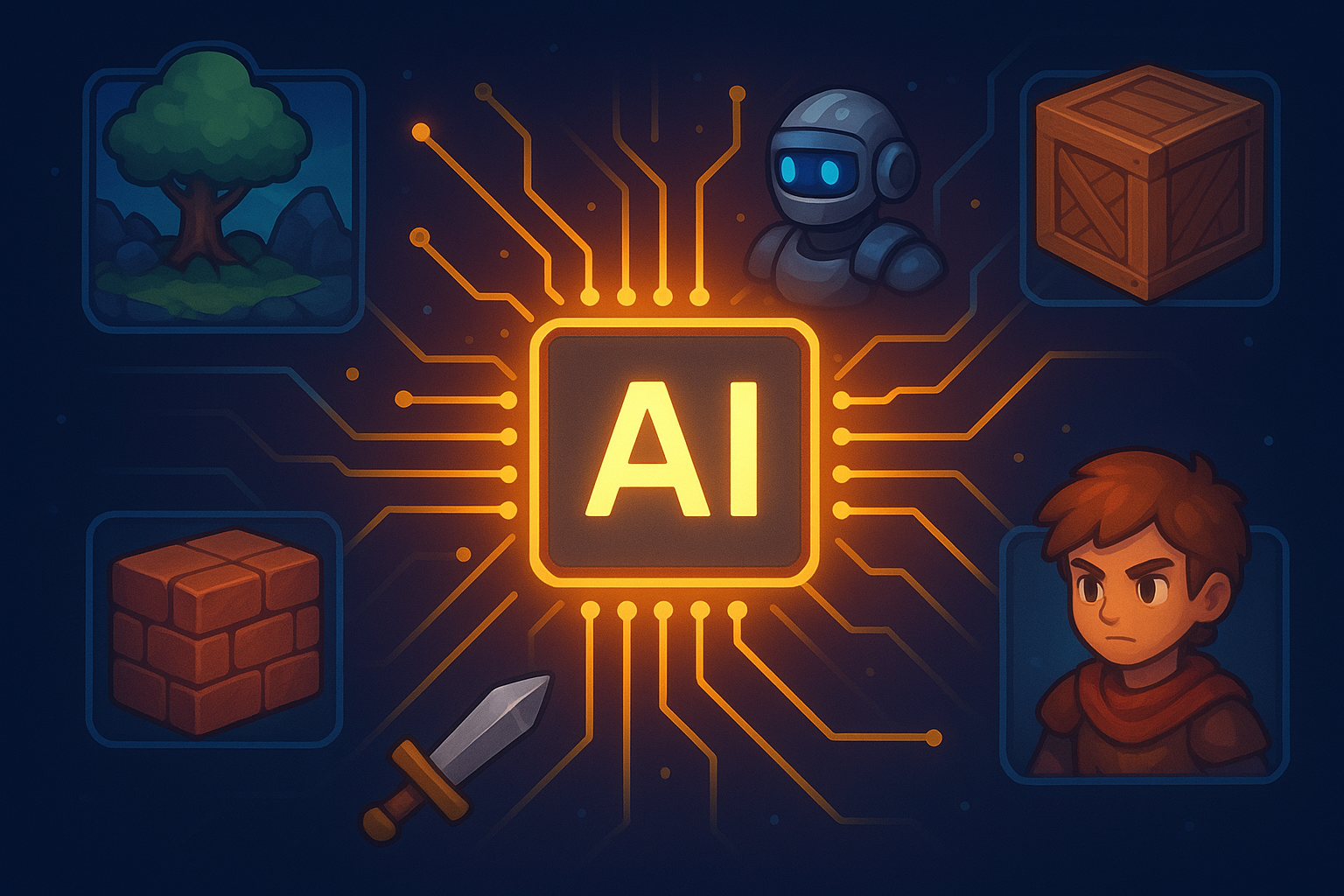
Accelerate Game Dev: How AI Asset Generators Boost Speed & Cut Costs
Game development has long been a labor of love, often requiring significant investments in time, talent, and resources. One of the biggest bottlenecks and cost drivers historically has been asset creation – designing, modeling, texturing, animating, and integrating every visual and interactive element within a game. However, a revolutionary shift is underway with the advent of AI asset generators. These sophisticated tools are not just a luxury; they are rapidly becoming an indispensable part of the pipeline, fundamentally transforming how games are made by drastically boosting speed and slashing costs, all while making professional-grade content more accessible than ever before.
The Game-Changing Power of AI Generated Game Assets
The core promise of AI asset generators lies in their ability to democratize and accelerate content production. Imagine creating intricate 2D sprites, dynamic 3D models, complex visual effects (VFX), or intuitive user interfaces (UI) not in weeks or months, but in minutes or hours. This isn't science fiction; it's the current reality for thousands of developers leveraging the power of
AI generated game assets. The impact is profound across the entire industry, from indie developers with shoestring budgets to large AAA studios pushing the boundaries of realism and scale.
These AI tools are designed to solve real game development challenges, from initial concept to final creation and beyond. They offer unparalleled advantages, often described as enabling asset production that is *10x faster, 10x cheaper, and requires zero specialized artistic skills*. This triad of benefits is a game-changer, breaking down traditional barriers to entry and allowing creative visions to materialize with unprecedented efficiency.
From Concept to Creation: Bridging the Skill Gap
One of the most remarkable aspects of AI asset generation is its ability to empower creators regardless of their artistic background. For solo developers or small teams without dedicated artists, the "zero art or animation skills required" claim is not an exaggeration. AI tools can transform a simple text description or a rough sketch into a polished, game-ready asset. This means that a programmer can now iterate on visual concepts directly, a designer can mock up UI elements in real-time, or a writer can visualize characters and scenes without waiting for an artist to interpret their vision.
This capability significantly reduces the reliance on extensive art departments for initial prototyping and even for much of the final asset pipeline. It allows developers to turn their own drawings and ideas into cool games, fostering a new wave of creativity and innovation. By simplifying complex processes like rigging, animation, and texturing, AI bridges the skill gap, enabling a wider range of individuals to contribute meaningfully to the visual aspects of game development.
A Toolkit for Every Game Developer: Specific AI Asset Capabilities
The versatility of AI asset generators is truly impressive, covering virtually every aspect of a game's visual and interactive components. Professional AI tools are emerging as comprehensive solutions, addressing the distinct needs of 2D, 3D, and even specialized asset categories.
Sprites & Animations Made Easy
Generating professional 2D game sprites can be a painstaking process, especially for complex characters with multiple states and animations. AI dramatically streamlines this. Developers can create high-quality sprites much faster, and for 3D animations, the process is even more transformative. Imagine generating professional 3D animations from a single image instantly with AI, complete with auto-rigging and the ability to generate unlimited animations. This includes the ability to generate 3D models themselves from 2D inputs, making the pipeline from concept art to animated character astonishingly short. This is where the true power of AI shines, accelerating what used to be a very specialized and time-consuming task.
Revolutionizing User Interfaces (UI)
Game user interfaces are critical for player experience but can be incredibly complex to design and implement, requiring careful attention to aesthetics, functionality, and multiple states. AI-powered design tools allow developers to create complete game interfaces from simple text descriptions, offering interactive chat and real-time previews. This means generating professional UI elements with multiple states and style variations in seconds, drastically reducing the time and effort traditionally associated with UI design. The ability to iterate quickly on UI designs can lead to more polished and intuitive player experiences.
Crafting Epic Visual Effects (VFX)
Visual effects like fire, explosions, slash trails, and magical spells add significant impact to a game but often require highly specialized software and expertise. AI makes creating professional-quality VFX accessible to all. By simply transforming any reference image, AI can generate stunning game visual effects, eliminating the need for complex software mastery. This capability empowers developers to add dynamic and engaging visual flair to their games without the steep learning curve or expensive tools of traditional VFX pipelines.
360-Degree Rotations & Marketing Assets
Beyond in-game assets, AI also assists with marketing and presentation. Tools exist to rotate characters 360 degrees in a single click, generating "turntable" videos perfect for showcasing game assets on websites, social media, or in presentations. This streamlines the creation of high-quality promotional materials, ensuring that games are presented professionally and appealingly, further accelerating the journey from development to market.
Seamless Integration & Scalability for All Studios
One of the greatest strengths of modern AI asset generators is their adaptability. They are not isolated tools but are designed to integrate seamlessly into existing production workflows. This means studios don't have to overhaul their entire development pipeline to reap the benefits. Instead, they can selectively adopt AI for specific tasks, gradually incorporating it where it offers the most advantage.
For **solo developers and small teams**, AI tools offer a complete asset pipeline solution, enabling them to compete with larger studios by producing high-quality content without a vast art team. This dramatically lowers the barrier to entry for ambitious projects.
**Mid-sized and AAA studios** can leverage AI to scale asset production for ongoing content updates, especially crucial for live service games that demand a constant stream of fresh content. AI can also handle the generation of promotional assets and marketing materials, freeing up their highly skilled artists to focus on more complex, conceptual, or unique creative challenges that still require the human touch.
By transforming ideas into game-ready assets instantly, AI-powered creation tools accelerate development timelines, allowing for rapid iteration and quicker releases. This agility is invaluable in a fast-paced industry where time to market can dictate success.
Practical Steps to Harnessing AI for Game Asset Creation
Adopting AI for game asset creation is simpler than many might imagine. While specific tools might have unique interfaces, a common workflow emerges that anyone can follow:
1.
Select a Style or Create Your Own: Most AI generators offer a wide array of predefined styles, from pixel art to hyper-realistic, fantasy to sci-fi. Many also allow you to train or refine a style to match your game's unique aesthetic, ensuring consistency.
2.
Enter a Detailed Prompt and Adjust Settings: This is where your vision comes to life. Describe exactly what you want to see, using as much detail as possible. You can then fine-tune settings like level of detail, color palette, lighting, and composition to guide the AI towards your desired outcome.
3.
Generate Your Game Asset: With a click, the AI will process your input and generate an initial image or model. This usually happens in seconds.
4.
Refine and Edit: The first pass might not be perfect, but that's where the iterative power of AI comes in. Most tools offer a full suite of AI design tools to edit, modify, or generate variations until you achieve the perfect asset. Experiment with different prompts and settings. This quick iteration cycle is key to efficiency.
5.
Export to Your Game Engine: Once satisfied, you can export your asset in a range of file formats compatible with popular game engines like Unity, Unreal Engine, Godot, and more.
Remember, AI is a powerful assistant, not a magic wand. While it significantly reduces the need for traditional art skills, understanding design principles and providing clear, detailed prompts will always yield the best results. For those looking to dive deeper into creating stunning visuals without prior art experience, resources like
No Art Skills? Generate Stunning Game Assets with AI Tools can offer invaluable guidance.
Conclusion
The landscape of game development is undergoing a fundamental transformation, driven by the incredible capabilities of AI asset generators. These tools are breaking down barriers, empowering creators of all skill levels, and offering unprecedented speed and cost efficiency. From accelerating asset production for live service games to enabling solo developers to realize ambitious visions, AI generated game assets are not just a trend but a foundational technology reshaping the future of interactive entertainment. By embracing these advancements, developers can dramatically accelerate their development timelines, reduce financial overhead, and ultimately bring more innovative and engaging games to players worldwide. The era of creation in minutes, not hours, is here, and it's exhilarating.